Robotic Hip Replacement: Put a Permanent End to Your Pain with Technology and Experience
A stabbing pain in your hip with every step you take… The stiffness you feel when getting out of bed in the morning… Even putting on a simple sock turning into a struggle… If these scenes sound familiar, you are not alone. Advanced-stage hip osteoarthritis is a serious condition that diminishes the quality of life of millions of people and restricts their freedom of movement. But this does not have to be a fate you must accept.
As Prof. Dr. Murat Bozkurt, by combining my more than thirty years of experience in Orthopedics and Traumatology with the most advanced technology, I offer a solution that will permanently free you from this pain: Robotic Hip Replacement.
Let’s First Understand the Problem: What Is Hip Osteoarthritis?
The hip joint is one of the largest and strongest joints in our body. This perfect structure, shaped like a ball (the femoral head) and a socket (the acetabulum), is covered with a smooth, slippery tissue called cartilage. This cartilage allows the bones to move against each other without friction, painlessly.
Over time, due to factors such as age, genetic predisposition, excess weight, or previous trauma, this cartilage tissue begins to wear away. We call this process of wear and deterioration hip osteoarthritis, or simply osteoarthritis in medical terms.
What Are the Typical Symptoms of Hip Osteoarthritis?
If you are experiencing one or more of the following symptoms, it may be time to consult a specialist:
- Groin and Hip Pain: A persistent pain that usually begins in the groin area and can spread over time to the side of the hip and toward the knee.
- Pain That Increases with Movement: Pain intensifying during activities such as walking or climbing stairs.
- Morning Stiffness: A feeling of stiffness in the hip when you wake up in the morning or after sitting for a long time, which resolves within a few minutes.
- Limited Range of Motion: Difficulty with movements that require bending forward, such as tying shoelaces or putting on socks.
- Limping: A gait disturbance the body naturally develops to protect the painful side.
- Joint Noises: Hearing “clicking” or “grinding” sounds from the hip during movement.
The Path to Surgery: When Is Hip Replacement Necessary?
When a diagnosis is made, our first goal is always to improve the patient’s quality of life through non-surgical methods. [suspicious link removed], we try to slow the progression of the disease with methods such as physical therapy, weight control, pain medications, and lifestyle changes.
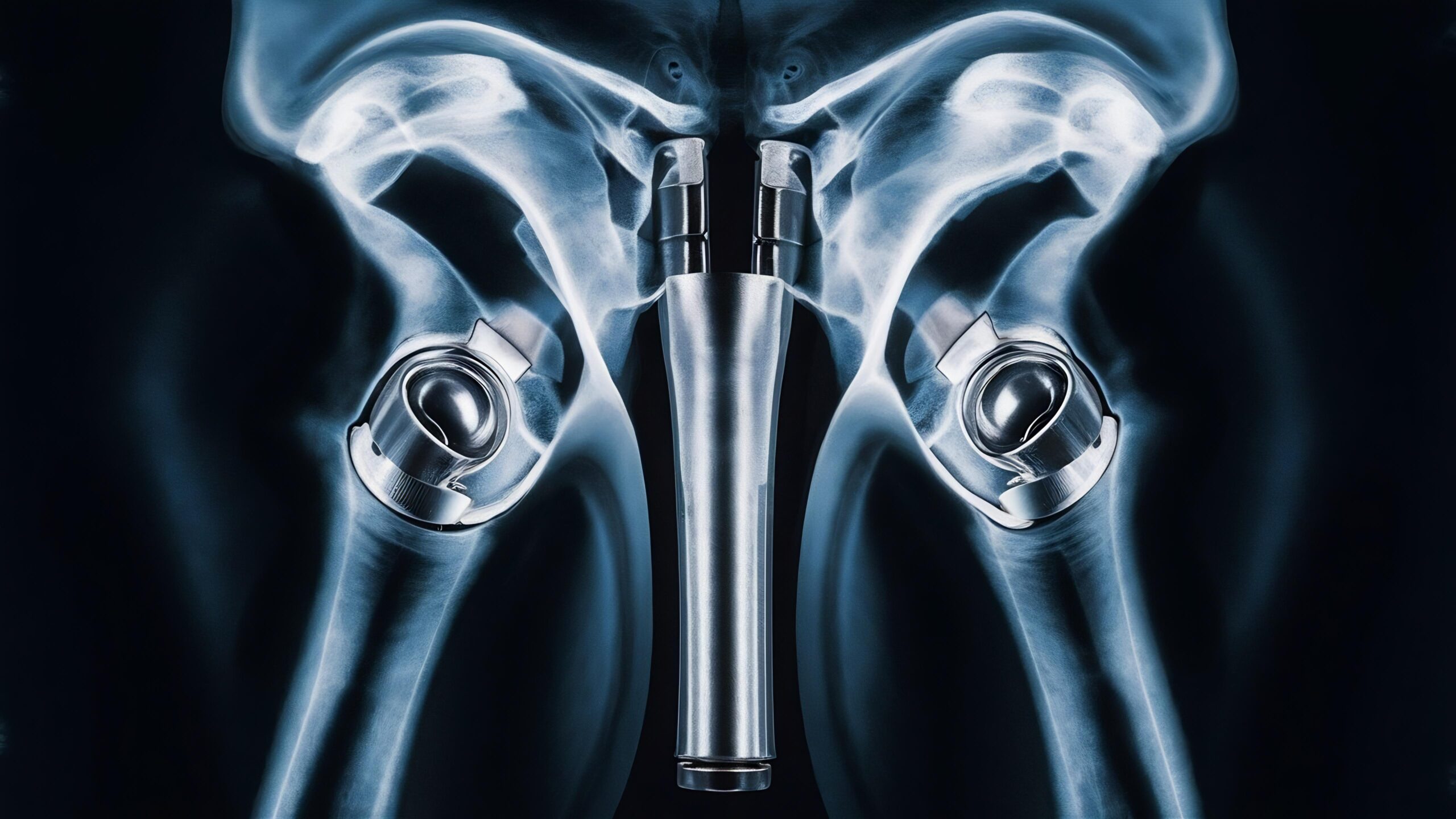
However, once cartilage damage reaches an irreversible level and these methods are no longer sufficient to control the pain, the most effective and permanent solution comes into play: Total Hip Replacement Surgery. This procedure is regarded as a “gold standard” in orthopedics and is one of the surgical interventions with the highest success rate, enabling patients to return to a pain-free life.
Robotic Hip Replacement: Achieving Excellence in Surgery
Over the years, I have performed thousands of hip replacement surgeries. Many of my active patients, from professional motorcycle racers to figure skaters, from mountaineers to triathletes, have returned to their lives and passions after successful surgeries. Seeing them enjoying life in the videos they send me has been my greatest source of motivation as a physician.
Based on this experience, I can say clearly: the success and longevity of a hip replacement depend entirely on the precision of planning and placement. The angle of the prosthesis, equal leg length, and its fit to the patient’s unique anatomy… My companion in achieving perfection in all these critical details is robotic surgical technology.
What Are the Advantages of Robotic Hip Replacement Surgery?
The robotic system is a technology that takes an experienced surgeon’s skills even further, increasing both precision and safety. Here are its key advantages:
1. Personalized Three-Dimensional Planning
Before surgery, computed tomography (CT) images taken from the patient are uploaded into specialized software. This software creates an exact digital model of your hip joint. Using this model, I plan the prosthesis size and type best suited to your bone structure, as well as the ideal angles for placement, with a precision of 0.1 degrees and 0.1 millimeters. This is a level of precision that cannot be achieved with standard methods.
2. Maximum Safety with a Near-Zero Margin of Error
During surgery, the robotic arm makes the bone cuts and prepares the prosthesis socket while remaining 100% faithful to the digital plan I created. Control of the robotic arm remains entirely with me; the system only prevents deviation from the plan. This minimizes the risk of damage to surrounding tissues such as blood vessels and nerves, and the prosthesis is placed in the most perfect planned position.
3. Flawless Leg Length Equality and Joint Stability
By continuously taking measurements during surgery, the robotic system provides real-time feedback on leg length and joint tension. This guarantees that there is no slightest length discrepancy between the legs at the end of surgery, and provides you with the most stable, most natural-feeling hip joint.
4. Faster and More Comfortable Recovery
Robotic surgery is performed with smaller incisions and minimal disruption to the surrounding muscle tissue. This means less pain after surgery, less bleeding, and consequently a much faster rehabilitation process. My patients are generally able to get up and take their first steps the day after surgery.
Conclusion: Let Pain Remain Only a Memory
Hip osteoarthritis does not mean you have to put your life on hold or give up the things you love. With robotic hip replacement surgery, where technology and experience come together, it is possible to leave your pain behind and return to an active, free, and fulfilling life.
Don’t let your hip pain diminish your quality of life any further. Contact us through our contact page to schedule an evaluation appointment and discuss your personalized treatment options and how robotic surgery can change your life in detail.
5. Frequently Asked Questions (FAQ) Section
Q1: How long does the recovery process take after robotic hip replacement surgery? A1: While the recovery process varies from person to person, the precision offered by robotic surgery results in less muscle and tissue damage. Patients generally get up the day after surgery and begin walking without support within a few weeks. A return to office work is generally possible within 3-4 weeks, while a return to a more active life may take between 3-6 months.
Q2: How long does a robotic hip replacement last? A2: With proper use and regular check-ups, modern hip prostheses manufactured with today’s technology and placed perfectly using the robotic system have a 90-95% chance of lasting more than 20-25 years. For many patients, this means a permanent, lifelong solution.
Q3: How long does the surgery take and how long is the hospital stay? A3: Robotic hip replacement surgery, including preparation time, generally takes between 1.5 and 2 hours. Our patients are typically kept under observation in the hospital for 2 to 3 days after surgery before being safely discharged.
Q4: Can I play sports after getting a hip replacement? A4: Absolutely, yes! Our goal is to help you return to life and the activities you love. Once full recovery is achieved, you can comfortably engage in low-impact sports such as walking, swimming, cycling, golf, and sailing. High-impact sports such as running and jumping, however, are generally not recommended.
Click Here to Book an Online Appointment or Call Us: 0312 502 70 74 0533 968 82 07